Iranian Singer Arya Aramnejad Still in Prison

Photo: Free Arya Aramnejad Facebook page

Photo: Free Arya Aramnejad Facebook

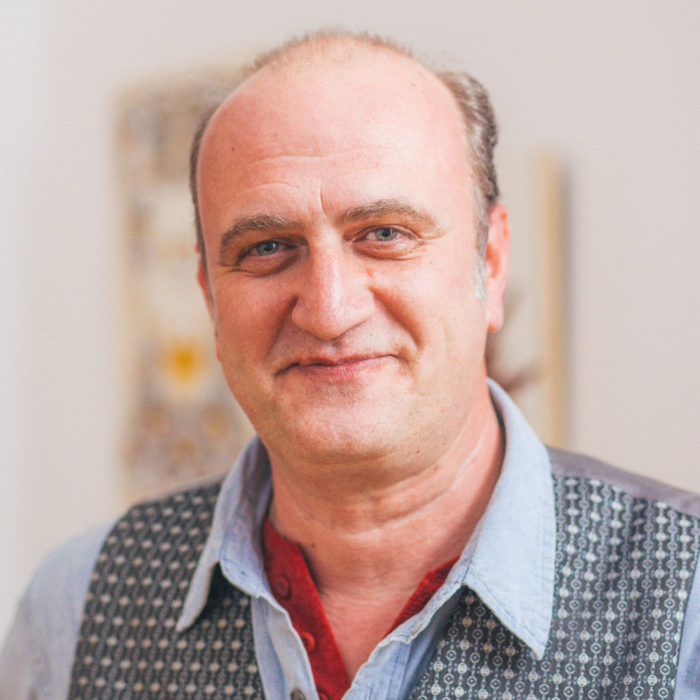
Iranian singer-songwriter Arya Aramnejad was arrested in his home on November 8, 2011. This was the second time Aramenjad was arrested and imprisoned for “seditious activities” relating to a song he composed and released in 2009. Three months after his second arrest he remains in custody.

Twenty-eight year-old Aramnejad, an outspoken supporter of Iran’s democratic Green Movement, composed the song “Ali Barkhiz” (Ali, Rise Up) after violent demonstrations in Tehran on December 27, 2009.

Also known as Ashura, December 27 marks a holy day that commemorates the death of Muslim religious leader Imam Hussein. Despite traditional ceasefire agreements on religious holidays, security forces fired on protesters who were also mourning the death of the reform movement’s spiritual leader, Grand Ayatollah Hossein Ali Montazeri, and disputing the results of the 2009 Iranian presidential elections. At least ten were killed and thousands were arrested in the clash.

Intelligence officials first arrested Aramnejad on February 15, 2010 after the song was released. Aramnejad said officials told him the song “Ali, Rise Up” was “endangering national security.” After spending fifty days in solitary confinement, he was sentenced to nine months in prison. In his courtroom testimony, he reported being subjected to physical and psychological tortures and denied medical care. Aramenjad further stated that the Iranian constitution, “gives me the right to criticize…it gives me the right to free speech and free thought. And because of this constitution that our fathers voted for, I am free not to be indifferent to the destiny of my country. Interestingly, instead of being commended, I have to stand trial today for this.”

After appearing in a court of appeals to hear the ruling on his case, Aramnejad, who was released on bail, was arrested a second time. In an interview with the Iranian website Kalme.com, Aramnejad’s wife, Adeleh Ziyai, reported that five plainclothes officers handcuffed Aramnejad outside the residence and forced him to open the door. Although they did not have a warrant for his wife’s belongings, the agents stole both Aramnejad and his wife’s computer, CDs, and writings.

Ziyai said Aramnejad’s arrest warrant stated “‘The accused is a singer for the seditious [Green] movement and was arrested for releasing his song “Ali, Rise Up” after Ashura in 2009. Upon his release on bail, the accused continued with his seditious activities.’”

In the interview Ziyai questioned the “seditious” nature of her husband’s songs, stating:
Are my husband’s songs “ anything but an honest commitment to the silent pain of an awakened nation? In which one of his songs has Arya ever lied or stated an mistruth? In which one of his songs has he put the security of his country or compatriots in danger?… Shame on us for treating our artists so unfairly and violating their rights when they are guilty of nothing more than solidarity with their nation and a having an endless sense of responsibility, honesty, and integrity.

Ziyai spoke to her husband one time after his detainment and has only once been allowed to visit him in prison

Iranian poet Sepideh Jodeyri compares Arya Armnejad to Víctor Jara.

Listen and watch “Ali, Rise Up” with English subtitles:

Sign the Free Arya Armnejad online petition

“Like” Free Arya Armnejad on Facebok

The Book Club: The Butterfly That Pollinates Burma’s Future

Below is the author’s personal account of a student book club in Rangoon, where she taught student union leaders who would later be imprisoned for their political views. Her account also details their January 13 release from prison under a general amnesty and a reunion with of some of the club’s members via telephone.

2007 Generation Student Union Members with Student Union Flag. Photo: Lapyae Way

This past January 12 put me on edge. My restlessness had nothing to do with my birthday, or its falling on Friday the 13th. Instead it had everything to do with the fate of my friends in Burma. That evening the Burmese diaspora had been stirred up by some news: Thein Sein’s government had just declared an amnesty regarding the release of 651 prisoners under the Criminal Procedure Act, effective January 13. It was the new Burmese government’s fourth large-scale clemency in eight months.

As Rangoon is twelve hours ahead of Pittsburgh, I decided to wait for the unbolting of Burma’s prison doors at my desk, starting at 7 p.m. It was a tense wait. How many prisoners of conscience would be released this time? Who would they be? Burmese social networking pages were awash with predictions and rumors. Our status messages reflected the mood of the day. The little green lights on my address book said the whole Burmese community I know in the West was online and sleepless that night—like myself.

The moment of revelation was worth all the wait and nervousness. Soon my heroic friends, the key dissidents of the ’88 Generation Students, who must have spent more than half of their lives in some of the world’s worst prisons, were on their way home. My little brothers and sisters, who had enthusiastically followed Burmese politics in a Rangoon book club, ended up in the interrogation centers, and were later imprisoned for their awareness, were freed too. I smiled countless smiles in joyful tears. The sense of happiness that has eluded me since my teenage days came back that evening. The amnesty was the grandest birthday gift I had ever received, from somewhere I least expected.

* * * *

Kyaw Ko Ko, Chairman of the ABSFU (Photo: Lapyae Way)

Those little bibliophiles! I met them for the first time in 2007 in Rangoon. They were very active. They were into the notion of truth. They were into humanitarianism. They were into philanthropy. They were youths whose thirst for knowledge in a hermit kingdom like Burma was manifested in their questions during my Saturday book club at the American Centre. For the meetings we set a topic for each session—literary, political or social—and gave ourselves a week to read up. But our discussions were not limited to the exchange of views and ideas from books and magazines; often we also shared our life experiences and aspirations.

The aim of the club was to encourage the members to pursue their interests in civil society with the hope that the strength of knowledge drawn from books and discussions would help guide them. Usually we searched for hidden messages in cryptic works by writers who managed to fool the censors. We tried to elucidate their ideas. We tried to dig for deeper meanings. We tried to apply their writing to the social and political setting of the day. Our weekly gatherings were always anticipated.

From time to time, when some of the members’ houses were searched by the authorities or one of us had been picked up and questioned by the military intelligence during the week, our enjoyable meetings became tense, insecure, and anxious. In those days, any gathering of that sort was illegal in Burma. The fact that we were operating out of the American Center, under the premises of a Western country which had been a vocal critic of the regime, did not help our public image. Some of the kids were told to quit the club by their university professors who were only acting to please the regime. I was subject to a ten-hour interrogation and sugar-coated threats in an intelligence den as the leader of the pack.

Despite the surveillance, or perhaps exactly because of that, our objective of student involvement in civic society was met sooner than expected. Some of our members began to get involved in HIV/AIDS organizations, monastic education projects, and homes for orphans. We were also active as a group. We often visited Rangoon mental hospital, bringing much-needed supplies and encouragement to inpatients.

In August 2007 I had to leave my beloved club when I joined the International Writing Program at Iowa University. A month later, back home, thousands of monks took to the streets in what would be known as the Saffron Revolution. While scenes of sutra-chanting monks being beaten up and chased down by troops armed to the eyes shocked the world and made it question its conscience, our club members quickly became an integral part of the democracy movement. Sadly some of the leading members of the club were arrested during the military crackdown conducted in the three months following the uprising. Only a few of them managed to flee to neighboring Thailand. By the time I went back to Rangoon in December 2007, the regime had denied me any chance to see the bibliophiles—they had been sent to Insein prison, the worst prison in Burma, and one of the worst in the world. In early 2008, they were sent to different prisons in remote parts of the country.

* * * *

Sithu Maung, Former Book Club Member and Member of ABSFU ( Photo: Eleven Media Group)

It took five years until I could hear their voices again. I dialed and waited. During the seconds when the satellite was busy reconnecting our worlds, my heart was pumping too much blood; it was literally pounding against my chest. A “Hello!” from Rangoon could cause goose bumps in Pittsburgh. By the time they realized it was me and shouted, “Sis!” my eyes welled up with tears.

For some youngsters who had just been through hell in jail, they did not sound dejected at all. In less than twenty-four hours after their release, they were back to doing what they had been doing before their arrest. They had held meetings. They had discussed how they could push on in politics. They had reaffirmed their commitment to the country. They had agreed to take responsibilities. They had grown even more spirited—even more courageous. They sounded more astute in their analysis of the country’s situation, more discerning in their outlooks on life.

The day was January 18. They were together. The young radicals whose network was cut apart by imprisonment were in the middle of a meeting to revamp the legendary All Burma Federation of Student Union (ABFSU).

In 1920 it was the student uprising against colonial education that gave birth to a new generation of nationalist leaders. The Rangoon University Student Union (RUSU), set up in 1931, expanded into the All Burma Student Union (ABSU) in 1936 during the second student uprising. Aung San, father of Burma’s opposition leader Aung San Suu Kyi, was its chair.

The ideological reservoir of the ABSU was the Nagani (Red Dragon) Book Club, which took after Victor Gollancz’s Left Book Club in London. The Nagani reached out to the populace by translating several political treatises, from Marx to John Strachey, into Burmese. Their proletarian strike in 1938, and as soon as Europe was on the brink of the Second World War, their call to arms under the Marxist banner “colonialism’s difficulty, freedom’s opportunity” were natural outcomes of their revolutionary fervor.

In 1951, three years after the country’s independence, the ABSU was renamed ABFSU. The 1962 military coup and the flattening of the ABFSU headquarters, “the fortress of democracy” on Rangoon University campus, did little to subdue student activism. The union continued to exist, albeit underground. During the 1988 nationwide uprising, under the leadership of Min Ko Naing, it reemerged as a most formidable force against the military regime.

Another military rule since 1988 had held Min Ko Naing and his comrades in different jails for an average of fifteen years. Their freedom in 2006 was short-lived. For their relentless civil disobedience campaigns, Min Ko Naing and thirteen other student leaders were thrown back to the cells in August 2007. It was then that the junior firebrands, who are now known as the 2007 Generation, sought to restore and renew the student union. Kyaw Ko Ko, a member of the book club, was elected to the chair.

* * * *

Di Nyein Lin, Deputy Chairman of the ABSFU (Photo: Lapyae Way)

I talked to Kyaw Ko Ko on the phone. Arrested in March 2008, he was serving an eight-year term when he was released on January 13. He has resumed his chair of the ABFSU. He immediately recalls the book club: ‘‘I’ll never forget how we had to struggle against all odds to be able to run the book club. At that time, the authorities were too paranoid. We couldn’t discuss anything freely. We weren’t supposed to read even Animal Farm. Nor were we supposed to discuss it. No doubt our union was conceived there. The book club, to me was a butterfly that had carried the pollen from the second generation’s union to the third.’’

Another member, Phyo Phyo Aung, got four years under The Unlawful Association Act for her leading role in the 2007 union and her humanitarian activities to help the victims of Cyclone Nargis in 2008. Released from Moulmein prison in October 2011, she has become the first woman general secretary of the ABFSU.

‘‘Our political life began at the club. It gave us a chance to get to know students with different backgrounds and experiences. It also exposed us to senior political activists, writers, and intellectuals. Our discussions and exchanges at the club have put us on a very firm political footing. Before the club, we only had secondary experiences. The club is a very significant part of my life,” Phyo muses.

‘‘I was an ordinary student from ordinary quarters. It was the book club that raised me up politically and got me into politics,’’ Sithu Maung comes in with his appraisal of the club. He was sentenced to eleven and a half years since the Saffron Revolution and was also released on January 13.

Di Nyein Lin’s case may be special. He managed to evade arrest until October 2008. He was indicted on six charges and given fifteen and a half years. One of the charges was filed under the Unlawful Association Act, for setting up the book club. ‘‘I would like to urge the youth to join us in building a future Union of Burma,’’ was the first sentence he uttered at the prison door on his January 13 release. He is the deputy chair of the union.

* * * *

Under the new government, Burma has taken an interesting turn. Books that were banned over the past forty years by the previous regimes are out in the open now. Freedom of the press remains a far-fetched dream, but censorship has been substantially eased. Politics is no longer a taboo confined to clandestine book clubs. The government has relented to a public campaign against the construction of a Chinese hydroelectric power project that would choke the mighty Irrawaddy at her confluence. So far the most welcome goodwill gesture by the authorities has been the release of political prisoners on January 13.

Perhaps change is in the air. Perhaps change is inevitable. Still, we all have our reservations. Kyaw Ko Ko says, ‘‘We do not fear being sent back to jail. None of the governments in our lifetime have ever honored their word. We are worried that the current government will not meet our expectations if they go back on their pledge. This concern is not just mine, but shared by the people. To be honest, I cannot fully trust the current situation.’’

Phyo Phyo Aung, Secretary of the ABFSU (Photo:Eleven Media Group)

‘‘We heard that there are anti-reformist and regressive hardliners in the government. The door to the path we want to walk may be opening up, but I am afraid those hardliners will u-turn the country,’’ adds Sithu Maung.

‘‘I hope the current development is not a one-step-forward-two-steps-backward scenario where a repressive system will be resuscitated in the end,’’ Phyo Phyo Aung says.

I know their feelings. We may have seen some reassuring steps taken by the new government, yet they are nowhere near an all-embracing transition. The government has to do a lot more to convince the people that they mean democracy. They can free the rest of the political prisoners. They can end hostilities in ethnic areas. They can entrust freedom to the media. They can overhaul public health care, education, and transportation systems. They can fight corruption on all levels. They can come clean by getting really serious about the rule of law. Et cetera…

We are happy with the political thaw in our country, but most of us remain vigilant. The fact that the army constitutionally remains above the parliamentary system makes it almost impossible for us—who have lived under direct and indirect military rules since 1962—to be absolutely certain about the country’s future. Most of us have adopted a “wait and see” approach. But to wait and see does not mean sit idle and get complacent; waiting is important, but while we wait we must also do what we can to affect the change we want to see. This is exactly the attitude I see in the members of the book club that has bloomed into the new generation of the ABFSU.

Tibetan Poetry in Translation: “Straying Far From Myself” by Ami Lhago

Original Chinese Text of Ami Lago's "Straying Far From Myself"

Below Sampsonia Way presents a poem from Tibetan poet Ami Lhago, member of the Three Provinces of Tibet poetry group. The poem was translated into English by Dechen Pemba, editor of High Peaks Pure Earth, a blog dedicated to Tibetan news and literature. The poem below is reprinted with her permission.

The theme of the poems written for the 66th gathering of the Three Provinces of Tibet poetry group is “Straying Far From Myself.”

According to custom, the group’s members propose themes for the poems–for example: “Flying Knife, Flying Knife”, “Winter,” “Poetry with the Smell of Blood,” or “Mother, I…” After a vote, the final theme is decided. All poems in the series must contain this title and subject matter.

“Straying Far From Myself” is an apt theme for a time when Tibetan society is dramatically changing in the face of increased political violence, immigration, industrialization, and religious tensions.

Over the next weeks, High Peaks Pure Earth will post two translations of this series every Wednesday.

Ami Lhago’s “Straying Far From Myself” was originally published in English on January 18, 2012.

Straying Far From Myself

If you look back
Maybe you would see
Yourself
If you face up, gaze far into distance
Maybe you would see
Yourself
Perhaps these are not necessary
You might always be there, like those Russian dolls
Trapped in yourself deep down layer by layer
The lotus-like you
Is living in the centre

“How far have I strayed from myself”

You peel off, layer by layer, towards your heart
Search. Accidentally deviate from the direction
Trap your feet in the mud
In the phantom of the urban forest

November 11, 2011, in Ngaba

Read more poems in the Three Provinces of Tibet poetry series.

Latest Killing Highlights Plight of Journalists in Pakistan

The following article was reprinted from Gandhara, a blog dedicated to Afghanistan and Pakistan written by Radio Free Europe/Radio Liberty (RFE/RL) journalists from Radio Mashaal (Pakistan), Radio Azadi (Afghanistan), the RFE Central Newsroom, and other services. It was originally published on January 18, 2012.

VOA journalist Mukarram Khan Aatif

Tribal journalist Mukarram Khan Aatif was unaware of the tragedy awaiting him when he called the representative of Reporters Without Borders (RSF) in Peshawar to confirm his participation in a training workshop on “responsible reporting” on the morning of January 17.

“I want to learn about journalism,” he told Iqbal Khattak, a representative of the Paris-based RSF, who spoke with Aatif to confirm his participation in the training workshop.

Hours later, Aatif’s world crumbled as two hooded gunmen opened fire while he was offering evening prayer at a mosque near his house in the Shabqadar subdivision of the Charsadda district, north of Peshawar.

The Pakistani Taliban was quick to claim responsibility for the attack. Ihsanullah Ihsan, calling himself a spokesman for the Hakimullah Mehsud-led Tehrik-e-Taliban Pakistan, telephoned another tribal journalist, Ihsan Dawar, to say that his organization had been behind the fatal assault.

The spokesman did not mention the motive behind the killing, but Aatif’s colleagues told the Paris-based RSF that he had been receiving calls from unidentified people “directing him how to cover events.”

As a resident of the Mohmand tribal agency, located just north of Peshawar, Aatif, 45, had been working for Voice of America’s Pashto-language Deewa Radio and the Urdu-language Dunya television channel.

His brother Muslim Khan told RFE/RL’s Radio Mashaal that Aatif had moved his family from Mohmand to the Shabqadar subdivision of the Charsadda district because of increasing militant activity.

Talking to Radio Mashaal, the bureau chief of Dunya TV, Safiullah, said Aatif was a pleasant, hard-working journalist.

Safiullah also noted that Aatif had moved to Charsadda because he was not feeling safe in the Mohmand tribal agency.

Deteriorating Security

The deteriorating security situation in the past few years has forced scores of journalists out of the tribal areas to settle in the comparatively safer city of Peshawar, the capital of the Khyber-Pakhtunkhwa Province.

However, even Peshawar has not been secure enough to ensure the safety of journalists, who are often sitting ducks for militants, mainly because of the nature of their profession.

Last year, a tribal journalist, Nasrullah Afridi, was killed in a bomb attack on his car while two other reporters, Asfandyar Khan and Shafiullah, died in a suicide attack in Peshawar the same year.

Reporters Without Borders says Pakistan was the deadliest country for media professionals in 2011, with at least eight journalists killed in connection with their work.

Threats to press in Pakistan are often considered part of the job. Less than a month ago, eminent journalists including Najam Sethi, editor in chief of the “Friday Times,” announced that that they had been receiving threats from “state and nonstate actors.”

Similarly, Hamid Mir, a prominent presenter with Geo TV, has also complained about threats from “unknown” people via text messages.

Lamenting the plight of media professionals and the threat to their lives in the line of duty, the former president of the Peshawar Press Club and veteran journalist Shamim Shahid said that the government has failed to provide security for people in his profession.

Mentioning the killing of Aatif as the latest in a series of fatal incidents, Shahid maintained that the United Nations should come forward to ensure the protection of journalists in Pakistan. He said 29 journalists have been killed in the country since 2004.

In May 2011, an Islamabad-based journalist, Syed Saleem Shahzad, was kidnapped and killed.

The government of Pakistan set up a judicial commission to investigate Shahzad’s murder. However, although the high-level commission looked at various aspects of the killing, it stopped short of identifying the murderers.

The violent death of Aatif only serves to emphasize how precarious the profession of journalism is in Pakistan, where not even the sanctity of a mosque is enough to ensure one’s safety.

– Daud Khattak

Read the original article here.

Essay: “Left Behind”

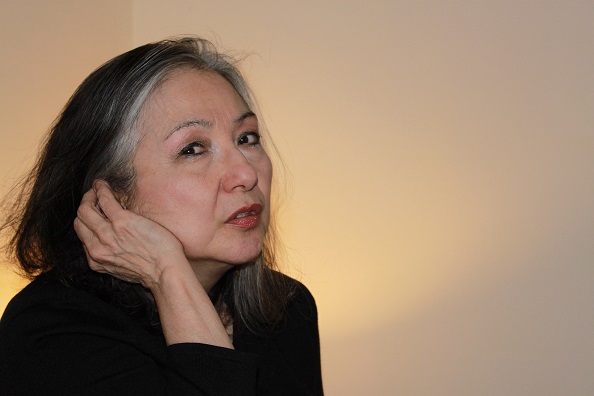
Maxine Case

South African writer Maxine Case made her first print appearance in the collection African Compass: New Writing from Southern Africa with the story “Homing Pigeons.” In 2007 her debut novel All We Have Left Unsaid won the Commonwealth Writers’ Prize for Best First Book, Africa region and was the joint winner of the Herman Charles Bosman Prize.

In 2010, after a fellowship at the University of Iowa’s International Writing Program (2009), Case spent three months in Pittsburgh as a City of Asylum/Pittsburgh guest writer-in-residence. She currently lives in New York City and is pursuing her master’s degree in Fine Arts via a fellowship from the New School University.

This month Sampsonia Way asked Case for some of her unpublished work. She responded with two essays, one of which is presented below.

“Left Behind” is a condensed memoir full of the observations, idiosyncrasies, and fears of an immigrant living in New York without a definite future. In Case’s clear, subtle voice, these characterizations transcend the “immigrant” and reach for the universal, yet remain deeply rooted in reality.

“Left Behind” is a Sampsonia Way Exclusive.

Left Behind

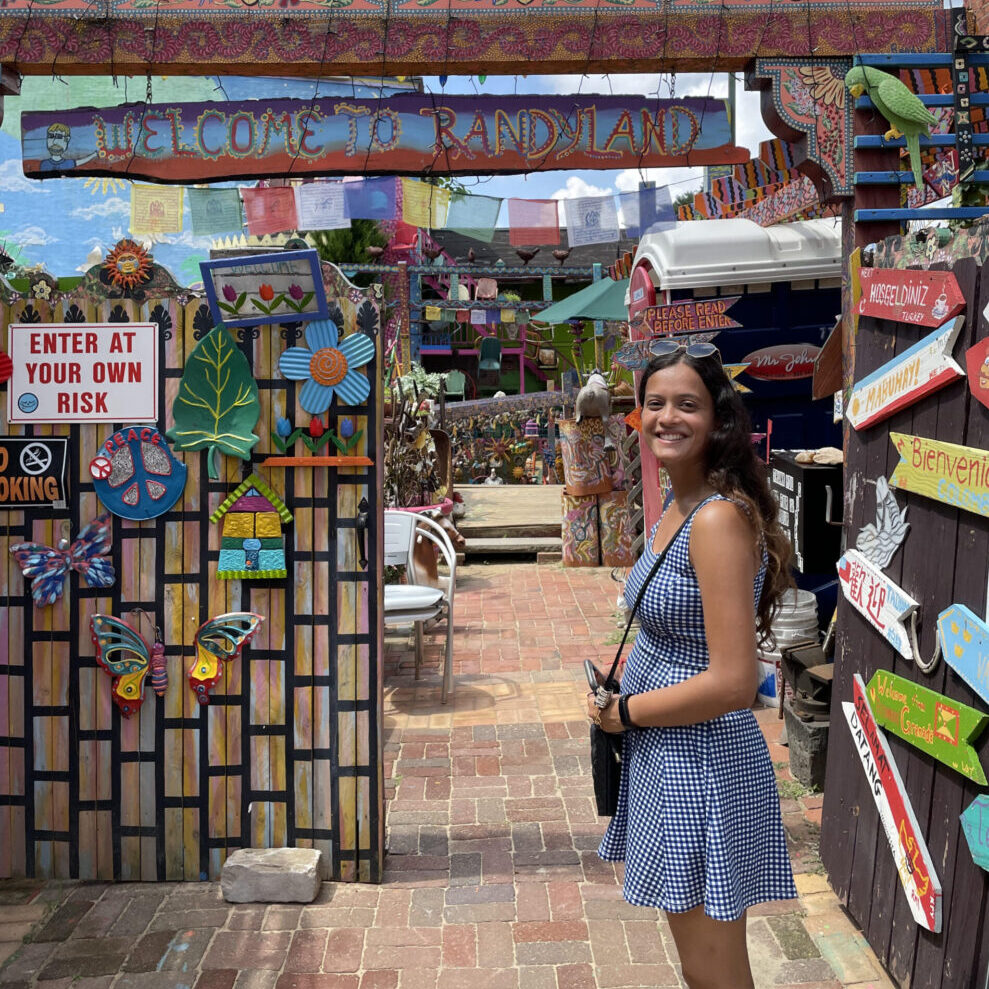
Photo courtesy of Maxine Case

The sign above the table reads: “Free! Help yourself (smiley face).” On the table—battered, brown wood covered with a cheap white cloth of alternating matte and shiny stripes—a motley selection of possessions artfully arranged. The table is in the cavernous lobby of my West Harlem apartment building. At night the lobby has the faded glory of an abandoned ballroom; the overhead lights are dim and the pattern of the mosaic tiles is obscured by cracks and a patina of grime.

Since moving into the building in May, 2011, I’ve noticed many such displays, although the table is a first. The offered objects range from useful to junk; essential to nonessential. How do the owners decide what they take with them and what to leave behind? So far, the threat of bedbugs, and an upbringing that eschews collecting other people’s castoffs means that I have resisted appropriating anything for myself.

Still, the toaster gives me pause—the white Silex toaster thoughtfully placed in its box. I need a toaster; I currently toast bread in the oven. When I first moved here, I had more urgent needs than a toaster. I make do. The toaster remains in the lobby. The next time I pass, it is gone.

Likewise, the two vases from which spears of green foliage spill and wilt, draws my attention. The vases contain no water, so I guess that they are merely decorative; festooning the table as if for an uncommon dinner party. One of the vases is chipped, but the other is perfectly alright. I could use another vase, but still I resist. My one vase—a one dollar Goodwill purchase—currently holds a rooted peace lily salvaged from a fallen shoot at my previous apartment, which I shared with two housemates. When I first moved it here, it had one or two roots. Now its root system is profuse, crowding the base of the vase. Perhaps one day I will buy a pot and soil, thus freeing my vase for its original purpose, but for now, the lily remains in residential limbo.

Days pass and the items are slowly swooped up, watched only by a plaster of Paris angel, precariously perched on the ledge formed by the tops of our mailboxes. On either side of the angel, desiccated carnations stand stiffly in glass tumblers. I am not sure who empties and replaces the flowers or why they are there.

Soon, all that remain are a pair of backless men’s slippers, navy blue, size eleven or twelve—the material napped in places. They could not be described as gently worn. Who would possibly want to slide his bare feet into another man’s slippers? Why had the owner not thrown them away? And if he could not bring himself to throw them in the trash, why hadn’t he recycled them instead? After all, the recycling bins are directly opposite the table.

Until recently, a large black suitcase lived at the foot of my bed. It was less than a suitcase than a jumped up duffel bag with wheels. Usually, clothes tangled out of it, irritating me. The suitcase / duffel bag did not belong to me, but to my younger sister, who had been staying with me for a few months. She came to New York to visit, and soon began talking about finding a job, getting the proper visa and eventually moving into her own apartment. My sister was a hotshot economist in Johannesburg, earning a fat banker’s salary before she quit her job. In New York she was just another would-be immigrant and American banks were not hiring. She left a few days before her visitor’s visa expired, her American dream come to naught.

I wonder whether my own return will echo hers at the end of May when my fellowship ends and my visa expires. I love my life in New York and too have begun to talk about staying. This building is one populated largely by immigrants from other cities or towns in America and different parts of the world. Like my sister and I, many of my neighbors are from Africa—a continent where resources are so strained that it would be unthinkable to throw away a pair of still-good slippers, just like I agonize about throwing away food. Some of us manage to stay, but the frequent displays in the lobby are a silent testimony that all too often, most of us do not.

Egypt and Revolution: Sampsonia Way’s Coverage from 2011


Today, January 25 marks the one-year anniversary of the “Day of Revolt,” the series of protests against Hosni Mubarak’s government that marked the start of the 2011 Egyptian Revolution. Mubarak resigned last February and is now standing trial against separate charges of corruption and ordering security forces to kill over 800 protesters. At the same time, Egypt is holding its first parliamentary elections since the military government took control in the president’s absence, and over 1,000 political prisoners have been released or pardoned this week, including blogger Maikel Nabil.

Despite these seemingly positive developments, large-scale protests in Tahrir Square have continued, with protesters, activists, reporters, bloggers, and dissidents alike remaining skeptical about Egypt’s political future.

Here Sampsonia Way presents a slide show of the highlights from our 2011 coverage of the Egyptian Revolution. This includes interviews with journalists, bloggers, and writers, as well as personal statements from imprisoned activists, among other articles.

Read “Freedom,” a short story by Egyptian writer and columnist Hamdy El Gazarr, a Sampsonia Way Exclusive

Freedom: A Story by Egyptian Writer Hamdy El-Gazzar

Protesters Assemble on Qasr al-Nil Bridge, heading for Tahrir Square

Today, January 25, marks the one-year anniversary of the first protests in Tahrir Square–protests that marked the start of the Egyptian revolution and became part of what is now known around the world as the Arab Spring.

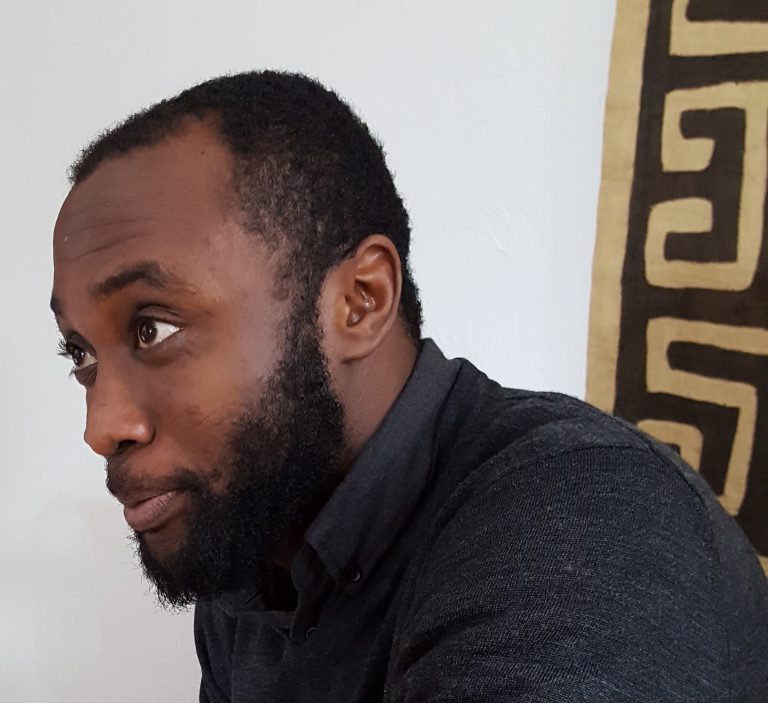
Hamdy El-Gazzar

To commemorate this historic date Sampsonia Way asked Egyptian writer, playwright, and columnist Hamdy El-Gazzar to contribute a story from his current project, Our Revolution: Stories to Fit in the Palm of Your Hand.

The stories in Our Revolution focus on the characters who lead, participated in, were injured, or died during the first month of the Egyptian revolution. All of the stories are based on real characters, events, and places.

The following story, entitled “Freedom,” is based on the four-line testimony of Wafaa Fathi Khalefa, who told a reporter about the man that gave his life to save her on a march across Qasr al-Nil Bridge.

Hamdy El-Gazzar’s “Freedom” is presented in its entirety, and is a Sampsonia Way exclusive.

See the highlights from Sampsonia Way’s 2011 coverage of the Egyptian Revolution.

Freedom

Translated from the Arabic by Nancy Linthicum
For Wafaa Fathi Khalifa

Here in this peaceful, deep sleep, I lie on the ground. I’ve finally come to recognize this earth as that of my homeland. I smile as I lie here in a bright darkness and think about what happened during that brief episode. Buried beneath the earth, I smile shyly like a young teen head over heels in love.

When it happened I didn’t have time to think. There was nothing that distinguished what I thought and wanted to do from my rash, impulsive actions. In a matter of seconds my heart and mind had reached a decision that my body executed quickly. Maybe that’s all it was. I wasn’t afraid, and it didn’t occur to me not to act.

Nothing could have stopped my momentum. I pushed my way to her and shoved her with my left hand as I jumped in front of her. I grabbed her by the waist and pushed her behind me so that her body was hidden by my own. I turned myself into a suit of armor. And that’s when it happened.

I don’t regret what I did, nor am I showing off. I’m not here to boast, and I’m not lying when I say that if I could return to the world of the living and do it all over again, I would.

What’s done is done-–no regrets. I only remember what transpired. A light took form in front of me in the darkness. My heart skipped a beat, and I felt a rush of something like divine ecstasy.

I smile happily now, for this young woman was exceptional, matchless, a kind of paragon in the last world, in your world. She was as sweet as a sip of cold water after a long thirst-–lips cracked, saliva so dry it’s like sandpaper in the throat. She was captivating and beautiful, like something from heaven.

From the back she appeared tall and slender, like a ballerina. Her dress was lily-white and her jet-black hair fell in long waves over her shoulders and back, like night embracing day. All of her movements-–her arms, her hands, her body-–were delicate and light. Her hands were wrapped tightly around a long flag-pole that she was waving in the air. The flag fluttered like a bird and swelled like an ocean wave in time to the movement of her reeling body and her resonant cries. In a clear, lively voice that welled up inside of her, she shouted: “Freedom! Freedom!”

I walked behind her like a slave fettered to a waking dream or like someone in a trance. She drew me to her as if she were a giant magnet. From behind I could see only the side of her face–-she was smiling. I don’t remember if she ever turned her head on that long neck of hers and looked behind her. If so, then she probably would have noticed me, and I would have caught a glimpse of her face. Afterward, in the brief moments when our eyes met, I saw how beautiful her face was and how it still had the glow of a smiling little girl. Her brown, smooth skin was flushed. Anger couldn’t mask her sweetness.

I remember the tone of her voice. It was a voice that belonged to someone who had suffered a long period of drought and bondage and that longed for liberation. She kept repeating the same word: Freedom. This one word summed up everything–-everything we lived and everything we suffered. Upon hearing her voice, sadness overpowered me. She was talking about me, shouting what I felt and what I too longed to shout. I began to repeat her with everything I had. I strained my vocal chords and shouted: “Freedom! Freedom!”

Protesters and Police forces clash at Qasr al-Nil Bridge

We were on Qasr al-Nil Bridge along with tens of thousands of other people. We were all trying to cross the Nile to reach Tahrir Square. The riot police in their black uniforms tried to stop us any way they could, including by force. We were in the middle of a fierce battle. She and I found ourselves sheltered by the crowd of hundreds that surrounded us, as we crawled towards Tahrir. Those on the edges were hit the hardest, and many of us fell, wounded and dead.

I don’t know how it happened, but suddenly we found ourselves face to face with a line of soldiers stand-ing shoulder to shoulder. They obstructed the sidewalk and blocked the flow of people in front of us on the bridge. At the head of the line was a solidly built officer with an ugly face who towered above us, angry and scowling. She was a couple of paces in front of me. The officer glared at her maliciously for several minutes, and then pulled his pistol from the leather holster that shone on his waist. He brandished it in the faces of all who had gathered, including her.

His stare was frightening, like a beast of prey or the grim reaper. But she didn’t see him-–she didn’t look at him once. It was as if he were blank space-–something that didn’t even have an odor. She kept shouting and she didn’t take a single step backwards. Instead she shouted boldly, “Freedom! Freedom!” She screamed it in the face of anyone who blocked our way. It was like nothing I’d ever seen before.

I caught sight of his eyes, and in them I saw that he’d already decided he was going to kill her. His thick index finger was reaching forward to press the trigger. I ran and jumped in front of her. With my left arm I shoved her behind me with everything I had-–fortunately I was bigger than she was. Our eyes met for a split second. In them I saw deep beauty, light and strong determination.

She was behind me now and was still shouting for freedom when she reached out and touched me and then threw her arms around me. From under my arm she lifted her head towards mine. In that moment her eyes said many things, but time moved too fast for me to understand them all. My body became like a sheet of iron, and I took two steps forward. I shouted at the world, at the solider, and at the officer: “Free-dom! Freedom!”

The officer became incensed and curled back his lips. His face and eyes shone with rage and hatred. It was as if he were telling me, “You can’t escape–-you’re mine.”

His lips drew tight and his body became rigid. He tightened his grip on his weapon authoritatively. From just a meter away he pointed the gun at my head –-directly at my forehead. He squeezed the trigger and released the bullet, a bright flash and some smoke.

My vision clouded as the bullet ripped open a hole in my head. I collapsed instantly and fell backwards onto her chest.

The last thing I remember feeling was her hands clasping me around my waist and her body propping me up. I remember hearing her long sigh and her enthusiastic shout. The last thing I saw was the vast blue sky and the sun shining as though it were sunrise. I smiled, and then I left.

No, I don’t regret anything.

-Ali Fathi

Azerbaijani Protests Led Through Social Media

  1. Emin Milli and Adnan Hajizada
  2. Bloggers and Index on Censorship press freedom award nominees Emin Milli and Adnan Hajizada were critical of the government on- and offline. On June 28, 2009 they uploaded a satirical video. Less than a month later, they were assaulted in a restaurant and arrested for “hooliganism.” They were released in November 2010.

In 2011 a Facebook campaign known as the Great People’s Movement was launched for activists in Azerbaijan. With accounts on YouTube, Twitter, and an official website, the Great People’s Movement has reached over 1,000 users who claim to be registered for protests in 2012, and a reported 40,000 users who have shared material. The movement’s goal is to organize social activism online and garner participants for public protests on March 11. The date is significant as the anniversary of 2011 protests known as the Great People’s Day.

  1. Mounting Tension
  2. 2005 March: Unsolved murder of Monitor editor Elmar Huseynov
  3. 2009 January: Azerbaijan broadcasting no longer includes international news sources: BBC, Voice of America, and Radio Free Europe/Radio Liberty, et al.
  4. 2010 September 7-9: Nine leading press freedom organizations form International Partnership Group for Azerbaijan; publishes “Free Expression Under Attack: Azerbaijan’s Deteriorating Media Environment” in October.
  5. 2010 November: Parliamentary elections suspected of fraud.
  6. 2011 March, April: Arab Spring; Protests also in Azerbaijan.
  7. 2011 March 11: Great People’s Day – Protesting in Baku launched through Facebook.
  8. 2011 November 23: Unsolved murder of editor Rafiq Tagi, previously imprisoned throughout 2007.
  1. Dissidents and Trumped Up Charges
  2. Eynulla Fatullayev (April 2007 – May 2011): Release credited to pressure from international organizations.
  3. Emin Milli and Adnan Hajizada (July 2009 – Nov. 2010): Bloggers, activists; conditionally released.
  4. Jabbar Savalan (Feb. 5, 2011 – Dec. 27, 2011): 20-y.o. blogger charged with drug possession; arrested after his Facebook called for protest. Charged with a 30-month sentence, but granted early pardon.
  5. Bakhtiyar Hajivev (March 4, 2011 – present): Charged January 2011 with evading military service after posting critical videos. Arrested after it was known he helped organize the Great People’s Day protest.
  6. Avaz Zeynalli (October 28, 2011 – present): independent daily editor-in-chief charged with bribery and extortion, charges filed by parliament member.

Last year the Great People’s Day was met with several arrests as protesters assembled in the capital and called for the release of fellow activists, some of whom were arrested for helping to organize the day’s protests. Their arrests, among many others in recent years, have drawn criticism from Amnesty International, the European Union, and several leading press freedom organizations.

The Great People’s Movement was founded by exiled journalist, social media activist, and blogger Elnur Majidli. Majidli has been living in France since he was charged for “inciting national, ethnic, or religious hatred” in April for the groups he organized on Facebook. Besides being a platform for organizing protests, his groups call for freedom from dictatorship, corruption, and tyranny, and for the release of political prisoners. Because of Majidli’s online activity the Ministry of Security has set-up a special Facebook team to monitor web activists. Members of Majidli’s family have also been blacklisted. If he returns to Azerbaijan he could face 12 years’ imprisonment. Majidli is one of many online activists who have faced arrest in Azerbaijan.

Fellow supporter of the Great People’s Movement, Bakhtiyar Hajivev, was sentenced to two years’ imprisonment on March 4 – a week before the Great People’s Day protests – on the trumped up charge of evading military service. Several other Azerbaijani activists have also been arrested near the time of political demonstrations on false and unrelated charges, such as drug possession.

This was the case for investigative journalist Eynulla Fatullayev, who was harassed for years before his first arrest in April 2007 for defamation. This was shortly followed by charges in October 2007 for terrorism, inciting racial and ethnic hatred, and tax evasion. He was also charged with drug possession in December 2009. All charges were contested by the European Court of Human Rights and are widely believed to be politically motivated.

Fatullayev was finally released from prison on May 26, 2011. He credited his release to attention from international organizations such as Radio Free Europe/Radio Liberty’s Azerbaijan Service Radio Azadliq.

Azerbaijan currently ranks at 152 out of 178 on the press freedom index. In 2003 the country was ranked at 113. Many citizens are afraid to report on government corruption under the continued regime of President Ilham Aliyev, who took office in 2003 and has been named a “predator of press freedom” by Reporters Without Borders.

Azerbaijan’s opposition party has remarked that the planned demonstrations of the Great People’s Movement are necessary in the light of the nation’s repressive political environment. Meanwhile, the Great People’s Movement “calls on the citizens of the world to take part in bringing freedom to Azerbaijan… and to create a dialogue among people who share the same vision. This is not simply an issue in Azerbaijan, it should be a concept that unites all the citizens of the world.”

Under Chávez: Media Harassed with Online Hacking, Phone Tapping and Censorship

“If not for the media, I would have 80% popularity.” – Hugo Chávez

Venezuelan cartoonist Roberto Weil

Venezuelan cartoonist Roberto Weil portrays President Hugo Chávez as a boot in response to a law which prohibits depictions of the likeness of the president and of patriotic symbols.

On Friday, December 2nd while Caracas was decked out to host thirty two heads of state for the Community of Latin American and Caribbean States‘ (CELAC) inaugural summit, several media outlets, universities, and organizations with critical views of the Venezuelan government claimed to have had their email and social media accounts hacked.

The fact that Caracas has been the headquarters for the creation of a new democratic forum that could improve dialogue and consensus in Latin America can give the impression that life in Venezuela operates within the boundaries of a democratic country where, despite any ups and downs of conflict, human rights retain a special place.

  1. President Hugo Chávez Frías
  2. Hugo Chavez
  3. Nov. 1992: Attempted to overthrow the government of Carlos Andrés Peréz
  4. Feb. 1999: Takes office after winning 1998 election
  5. July 2000: Re-elected under new constitution for a six-year term
  6. Apr. 2002: Abortive coup. Chavez returns to power after two days.
  7. Aug. 2004: Wins recall referendum on whether he should serve out rest of his term
  8. Dec. 2006: Wins another six-year term with 63% of the vote
  9. Dec. 2007: Loses constitutional referendum which included proposal to allow the president to run indefinitely for office
  10. Feb. 2009: Wins referendum that lifts term limits on elected officials
  11. Sep. 2010: Chavez party wins majority in National Assembly elections but opposition gets some 40% of seats
  1. Hacked: Prominent Figures
  2. Laureano Marquez, Venezuelan comedian
  3. - Comedian Laureano Márquez
  4. - Rector of Central University of Venezuela Cecilia García Arocha
  5. - Poet, writer, and television producer Leonardo Padrón
  6. - Political activist and student representative David Smolansky
  7. - Director of the School of Economics of UCV José Guerra
  8. - Host of the popular show Radar de los Barrios Jesús Torrealba
  9. - Leftist politician Douglas Bravo
  10. - Journalist Milagros Socorro
  11. - Journalist Sebastiana Barráez
  12. - Social fighter Luis Trincado
  13. - Director of polling company Luis Vicente León

However, that was not the impression that presented itself the day the hacking victims stepped forward. The list of victims included people that play important political and institutional roles, artists, journalists, and well-known citizens like the famed comedian Laureano Márquez. They declared themselves victims of the “computer terrorism policy enforced by the government of Hugo Chávez Frías.”

Besides Márquez, those “hacked” were the rector of the Central University of Venezuela (UCV), Cecilia García Arocha; the poet, writer, and television producer Leonardo Padrón; the political activist and student representative David Smolansky; the director of the School of Economics of UCV, José Guerra; the host of the popular show Radar de los Barrios, Jesús Torrealba; and the ex-guerilla fighter and leftist politician Douglas Bravo, who reported that the Venezuelan government “not only disrespected freedom of expression, but sought to intimidate us and a move us away from public debate.” The full list is much more extensive and includes journalists like Milagros Socorro and Sebastiana Barráez; social fighters like Luis Trincado; directors of polling companies like Luis Vicente León; and others.

Some of them, after concerted effort, recovered control of their accounts. Others remained powerless as their names and accounts were used to attack and insult dissidents, political leaders, and anyone that identified with the opposition.

To form an accurate assessment of the reality of Venezuela—whether the arena be political, social, or economic—is a truly complex and laborious task. With certainty, there is no other country in Latin America where such a high contrast exists between the two poles that divide Venezuelan society. We can choose any subject at random and the perceptions will always be mutually exclusive: On one side is the vision that the independent media shows; on the other is the enormous propaganda apparatus, installed by Chávez with a multi-million dollar investment.

For example: Is the state oil company PDVSA in a situation of debt and operational debacle or has it become a revolutionary model of administration and efficiency? Has poverty been reduced to minimal levels like the official propaganda insists, or are the rates stagnant despite the fact that the government has used Venezuela’s revenue from international oil sales for proselytism purposes? Do Venezuelans enjoy the highest level of freedom of expression in their history, like the Revolutionary government claims, or is it a reduced, beaten right, under permanent siege since Hugo Chávez installed himself in power in 1999? The latter is a debate that remains, despite the fact that during Chávez’s term there have been more than a thousand documented assaults against freedom of expression. The list of assaults includes a range of all possible affectations against the media and journalists, from verbal abuse to the closure of television and radio stations.

The crucial theme of freedom of expression is constantly at the center of the debate, which involves, of course, competing sectors, but also Latin American social movements, national and international NGOs, and the Inter-American Commission on Human Rights and United Nations Commission on Human Rights, who frequently issue reports on conditions in the country. Despite forceful evidence about the situation of freedom of expression in Venezuela, there is no way to conciliate positions between the parties involved.

Continue reading this article on page 2

Burma’s Political Prisoners: They Are Free, but What About Us?

Min Ko Naing, a prominent student leader in front of Thayet Jail on January 13, 2012 (Photo: The Voice Weekly)

Even within the predictable pattern of reforms, the Burmese government keeps us pleasantly surprised. Friday the 13th was the day of choice for the recent release of 651 political prisoners and some of the former members of Burmese Military Intelligence who were arrested along with their chief Khin Nyunt in 2004. It was not the full moon day, the Buddhists’ sabbath, nor President Thein Sein’s birthday.

If anything, the choice of Friday the 13th tells us that the Burmese notion of blessing is very different from that of the West.

The most poignant responses to this pardon come from former Burmese political prisoners, who best know what it is like to walk out of a Burmese jail. “I think no other nation has ever witnessed such a jubilation; the sight of thousands of people celebrating in front of jails,” comments senior journalist Ludu Sein Win. Artist Htein Lin calls it “the glorious day.” Writer Khet Mar writes, “I had forgotten what happiness was like until today.” Baby Shwe, a Burmese Parisian, rejoices, “La plupart des prisonniers politiques sont libérés aujourd’hui. Vive la Birmanie!”

Among those released this time were Shan dissident Khun Tun Oo (serving ninety three years since 2005), key activists from the 88 Generation Students Group: Min Ko Naing, Ko Ko Gyi, Nilar Thein, Mie Mie, Htay Kywe (all serving sixty five years or more since 2006-08), and blogger Nay Phone Latt (serving twenty years and six months since 2008). Most of them had been incarcerated in connection with the 2007 monk uprising popularly known as the Saffron Revolution.

Shan Nationalities League for Democracy (SNLD) party chairman Khun Tun Oo was released on Jan 13, 2012 (Photo: Burma VJ Media Network)

January 13th was the third wholesale amnesty and commutation of sentences under the new government. In May last year, six months after Thein Sein’s government took over, 4,578 prisoners were released. Of those, only 55 were political prisoners. In October, there were 220 political prisoners among the 6,359 set free. Most of the prisoners released in October were members of the opposition party, the National League for Democracy (NLD). Their release reflects the benefits of ongoing dialogue between the NLD leader Aung San Suu Kyi and Thein Sein, yet an estimated one thousand prisoners of conscience remain in Burmese jails.

Not everyone is happy with the clemency, however. Complaints on social media abound about the release of former Burmese Intelligence chief Khin Nyunt, who is supposed to be serving a forty four year sentence in prison for corruption. Khin Nyunt did not have to go to jail; he had been kept under house arrest.

One commentator said, “Khin Nyunt’s release might be a test to the tolerance of the Burmese people…when it comes to evil, he is second only to Ne Win (the general whose military coup turned Burma into a police state in 1962).” Another said, “I am happy that prisoners were released. But no one can deny that he (Khin Nyunt) was the head of an organization that has dragged the whole country down into a mire of fear.”

“Have we forgotten that it was Khin Nyunt and his apparatus whose slander in the (state-run paper) New Light of Myanmar reduced the worth of Aung San Suu Kyi and her party to less than two-cents?” a lady complained. Another one used a marketing analogy: “This is a classic sales scenario. One has to promote unpopular items together with popular ones; in this case, former intelligence personnel with dissidents.”

Khin Nyunt, former Prime Minister and Military Intelligence boss released from the house arrest by the government amnesty at his resident in Yangon, Myanmar, 13 January.(EPA)

It is true that the erstwhile prime minister Khin Nyunt, who now says he will shun politics and praises Thein Sein’s reforms, is responsible for “breaking many lives” as the intelligence chief. The bestial methods of his henchmen’s medieval torture are legendary.

Yet, if we are to incriminate any former generals for their direct involvement, or implications, in human rights abuses, Thein Sein himself and most of his cabinet, not to mention the retired Supremo Than Shwe, should be subject to law. For her part, Aung San Suu Kyi has always been magnanimous; she has repeatedly said that she trusts Thein Sein. For this apparent turning, the Lady has been gibed in some quarters, raising concerns for her security.

Amnesty to Khin Nyunt is indeed a test. A test to see how we Burmese will balance our sense of justice against the limited freedom we are enjoying under the new administration. A test to see how genuinely free we can be: Free from malice, vengeance, and acrimony—the traits that have marred Burmese political culture—especially in its recent history.

Current Issue: Text-Only Version
Pittsburgh Literary Calendar